 Accessible Home Hub
WORLDWIDE PLANNING · CONDITION ROADMAP
Parkinson’s: home mobility and everyday tasks
Review walking routes, movement difficulties, bathroom tasks and night-time access with the Parkinson’s care team.
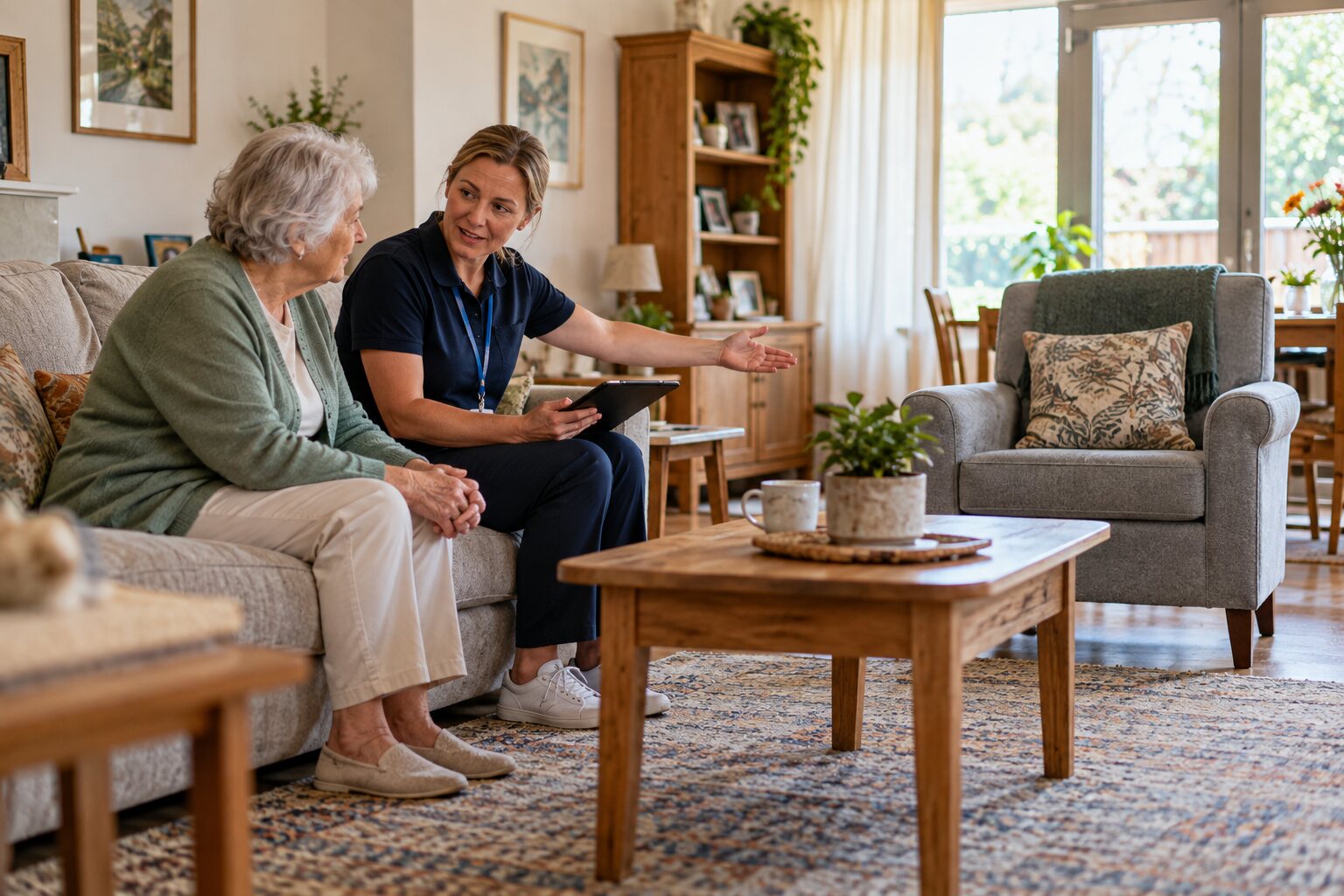
Plan around the person’s assessed abilities, goals and actual equipment. This guide prepares questions for the care team; it does not prescribe treatment, transfer techniques or installation dimensions.
Record where movement becomes difficult
Freezing can occur at doorways, turns and changes of surface. Record where and when it happens, including distractions or medication timing, and discuss the pattern with the clinician and physiotherapist. Do not change medication from this guide.
Cueing strategies may help some people, but need individual teaching and trials. Ask a Parkinson’s-trained therapist whether a visual or rhythmic cue is appropriate; avoid applying a universal floor-tape layout or assuming a laser device will prevent falls.
Review routes, flooring and lighting
Look for clutter, loose rugs, cords, glare and uneven transitions. Check space for the actual walking aid and turning movements. Compare stable surfaces and lighting with the assessor rather than assuming one flooring material is best for everyone.
Assess sitting, bed access and night-time routines
Discuss getting into bed, turning, standing and reaching lighting or help. Ask the therapist to assess chair and bed height, support needs and any assistance during difficult periods.
Transfer poles, bed rails and low-friction bedding need an individual risk and compatibility assessment. Do not install a support or change bedding solely because of a diagnosis; check fixation, slipping and entrapment risks, and ask for training where equipment is prescribed.
Plan bathroom tasks and usable controls
Record washing and toileting tasks, fatigue, available space and helper positions. Rail location, seat height and transfer arrangements should be assessed for the person. Hinged rails on both sides are not a universal requirement.
Trial controls for reach, grip and tremor. A lever or touchless control still needs to be usable reliably, including during outages or sensor failure.
Plan ahead and agree review points
Use the general home adaptation timeline to organise current needs, next-stage questions and reasons to review sooner. Related planning guide added 30 October 2026.
Ask the care team which changes may take time to assess, fund, deliver or install. Keep a current plan and a next-stage plan, with a named contact and review date. Revisit the plan after a change in everyday tasks, equipment or available assistance; progression is individual.
- Now: record essential routes, current difficulties and an agreed temporary arrangement.
- Before ordering: trial controls and equipment where possible; ask about loans, rental, servicing, returns and who provides training.
- At each review: check access, communication, backup arrangements and whether the resident’s priorities have changed.
Plan the return-home discussion · Record controls and backup access · Find local assessment and support routes.
Sources and further reading
- Parkinson’s Foundation: Freezing
- Parkinson’s Foundation: Home safety
- Parkinson’s Foundation: Therapy roles
Sources reviewed 7 October 2026. No hands-on testing or clinical endorsement is claimed.
Plan together
For residents and families
Record which tasks are difficult, when difficulty occurs and what the person wants to do independently. Take the record to the assessment and agree who will review changes.
For contractors and design professionals
Work from an assessed brief. Check equipment compatibility, supporting structure, manufacturer instructions and local requirements before installation.
Turn this guide into a plan
Choose the next step that fits your project. These tools help prepare a discussion; they do not replace an individual assessment.
Frequently asked questions
Can a floor cue prevent every freezing episode?
No. Ask a Parkinson’s-trained therapist to assess and teach an appropriate cueing strategy, then review how it works for the person.