 Accessible Home Hub
GETTING STARTED · WORLDWIDE PLANNING
Prepare for a home accessibility assessment
Bring a record of difficult tasks, not a shopping list.
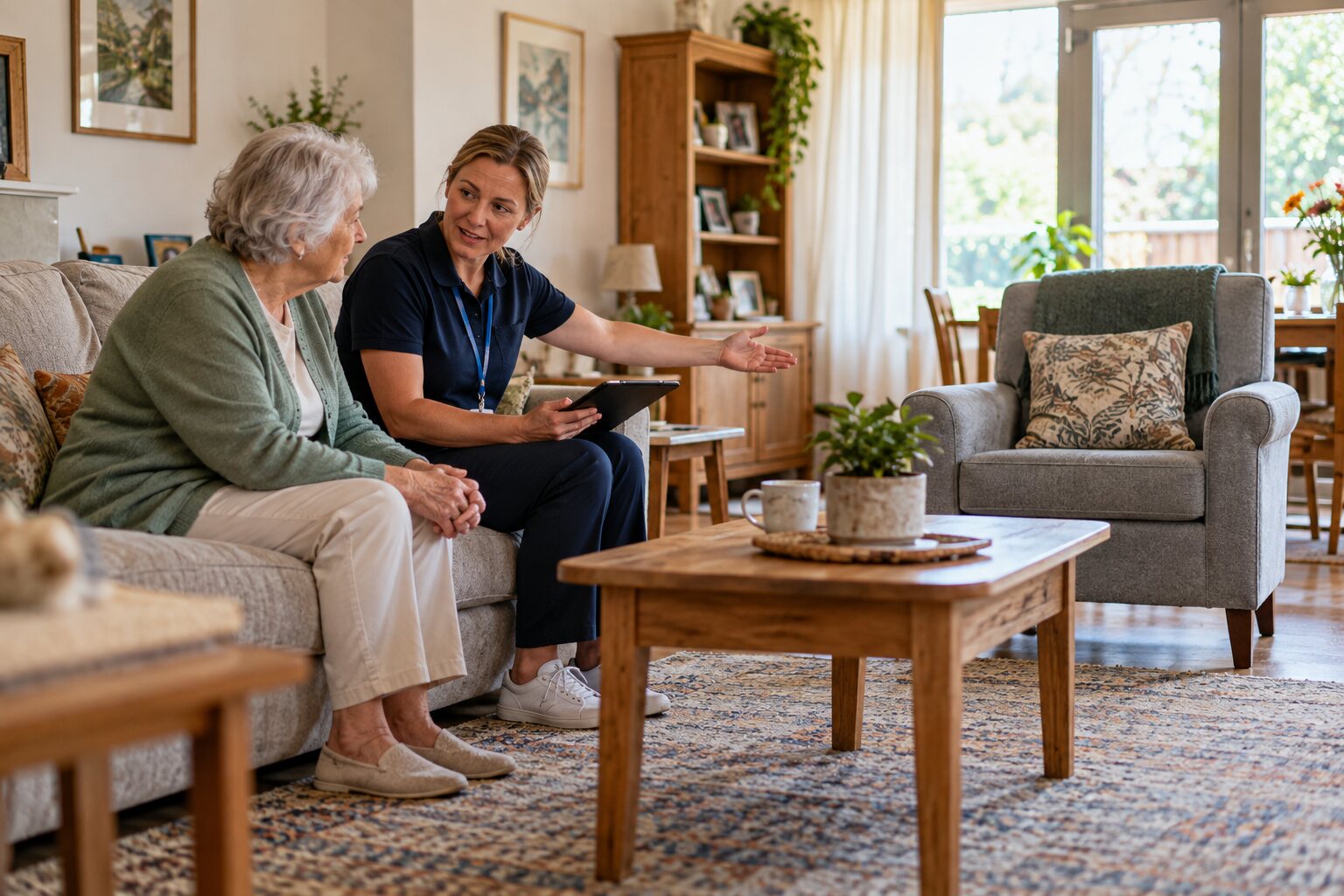
An assessment is a chance to connect the person's daily needs with their home. The professional should understand what happens on a typical day, including tasks that take extra effort or need another person's help. Service names and eligibility vary by country.
Make a short task diary
For a few days, note the task, location, difficulty and help currently used. Include the person’s preferences and what matters most to them. Do not stage a risky activity for a photograph or demonstration; describe it instead.
Prepare the practical details
- A simple room sketch and doorway measurements, if you can collect them safely.
- Equipment model names and instructions already available.
- Ownership or tenancy details and known permission requirements.
- Upcoming changes such as a planned return home or building work.
- A trusted person to take notes, with the resident's agreement.
Questions to take with you
What options address the main difficulty? Can equipment be demonstrated or trialled? Who confirms fit and installation? Is anything available through a local support service before we buy it ourselves? Who do we contact if needs change?
Leave with a written next step
Record the recommendation, the responsible person, what happens next and any information still needed. Clarify whether a proposed item has been assessed for this person and room. Ask how to report a concern after delivery.
Find the correct local starting point
In England, the NHS describes requesting a home assessment through local social services. Elsewhere, contact the appropriate local health, ageing or disability service. Our country notes link to official starting points; they do not determine eligibility.
Sources & further reading
Sources checked 6 October 2026. Our planning worksheets are original organisational aids, not clinical assessments.
A script for the first conversation
“We would like help with this everyday task: ______. This is what happens at the moment: ______. The resident would prefer: ______. Who should assess this, and what can we try before deciding what to buy?”
Ask who will follow up, which permissions or funding decisions are needed, and when to review the arrangement. Bring the resident’s priorities and your questions; avoid assuming a diagnosis determines a particular modification.
Download blank conversation sheet (PDF, 1 page)
The downloadable sheet is blank for handwriting. To type your notes, record the conversation in the free planning pack and use its print button. No sign-up is needed.
Turn this guide into a plan
Choose the next step that fits your project. These tools help prepare a discussion; they do not replace an individual assessment.