 Accessible Home Hub
WORLDWIDE PLANNING · ADAPTATION ROADMAPS
Condition-specific home adaptation roadmaps
Explore home-planning questions for changing mobility, memory and support needs. Start with the person’s priorities and an individual assessment.
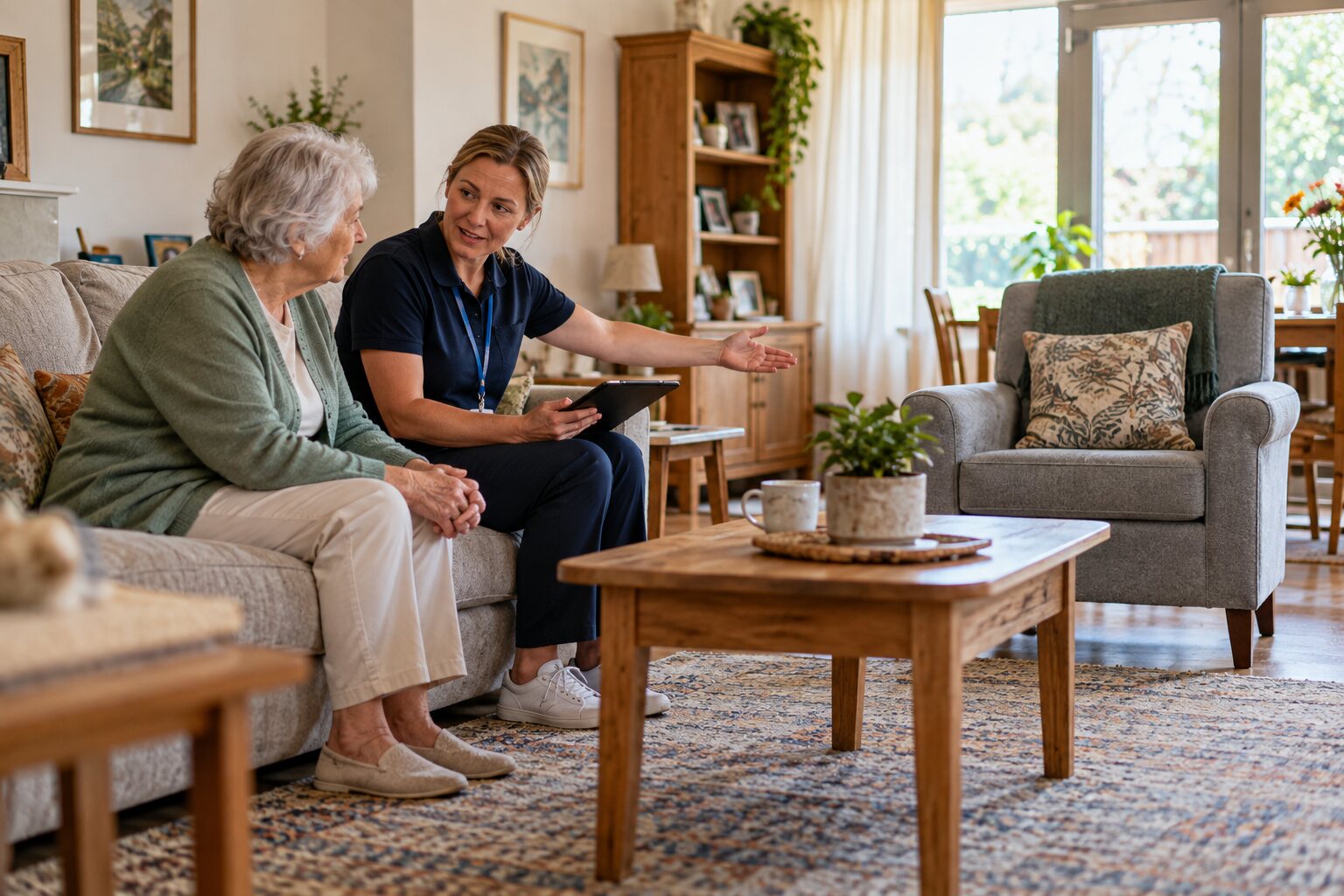
Plan early with the care team. Assessment, funding, permits and construction times vary; there is no universal renovation timetable or standard layout that fits every diagnosis.
A timeline for changing mobility
Use four planning stages to connect current tasks, a possible next stage, interim arrangements and reviews. Agree actions and review dates with the resident and care team.
Open the home adaptation planning timelineNeurological and changing mobility needs
Record essential routes, equipment needs and questions for the assessment team.
ALS and changing mobility
Plan entrance access, bathing, equipment, assistance and backup arrangements with the ALS/MND care team.
Published · ALS/MNDRead guide →Parkinson’s and movement safety
Review movement difficulties, lighting, usable routes and everyday tasks with the Parkinson’s care team.
Published · Movement supportRead guide →Memory and cognitive support
Dementia and Alzheimer’s home environment
Review recognition, everyday tasks, alert response and emergency access with the person and their care team.
Published · Memory supportRead guide →Rehabilitation and specialised equipment
Stroke recovery and one-sided weakness
Plan home access, everyday tasks and assessed support with the stroke rehabilitation team.
Published · RehabilitationRead guide →Bariatric equipment and home fit
Review equipment dimensions, rated capacities, transfer assessment and structural checks.
Published · Specialised equipmentRead guide →Plan together
For residents and families
Record the activities that matter most, current difficulties and changes you want to discuss. Involve the resident in decisions and agree a review date.
For contractors and design professionals
Use an assessed brief and the actual equipment dimensions. Confirm structural suitability, installation instructions and local requirements before specifying work.
Official starting points
These organisations offer guidance to discuss with an individual care team. Our guides do not replace their advice or claim clinical endorsement.
Turn this guide into a plan
Choose the next step that fits your project. These tools help prepare a discussion; they do not replace an individual assessment.