 Accessible Home Hub
WORLDWIDE PLANNING · PRACTICAL GUIDE
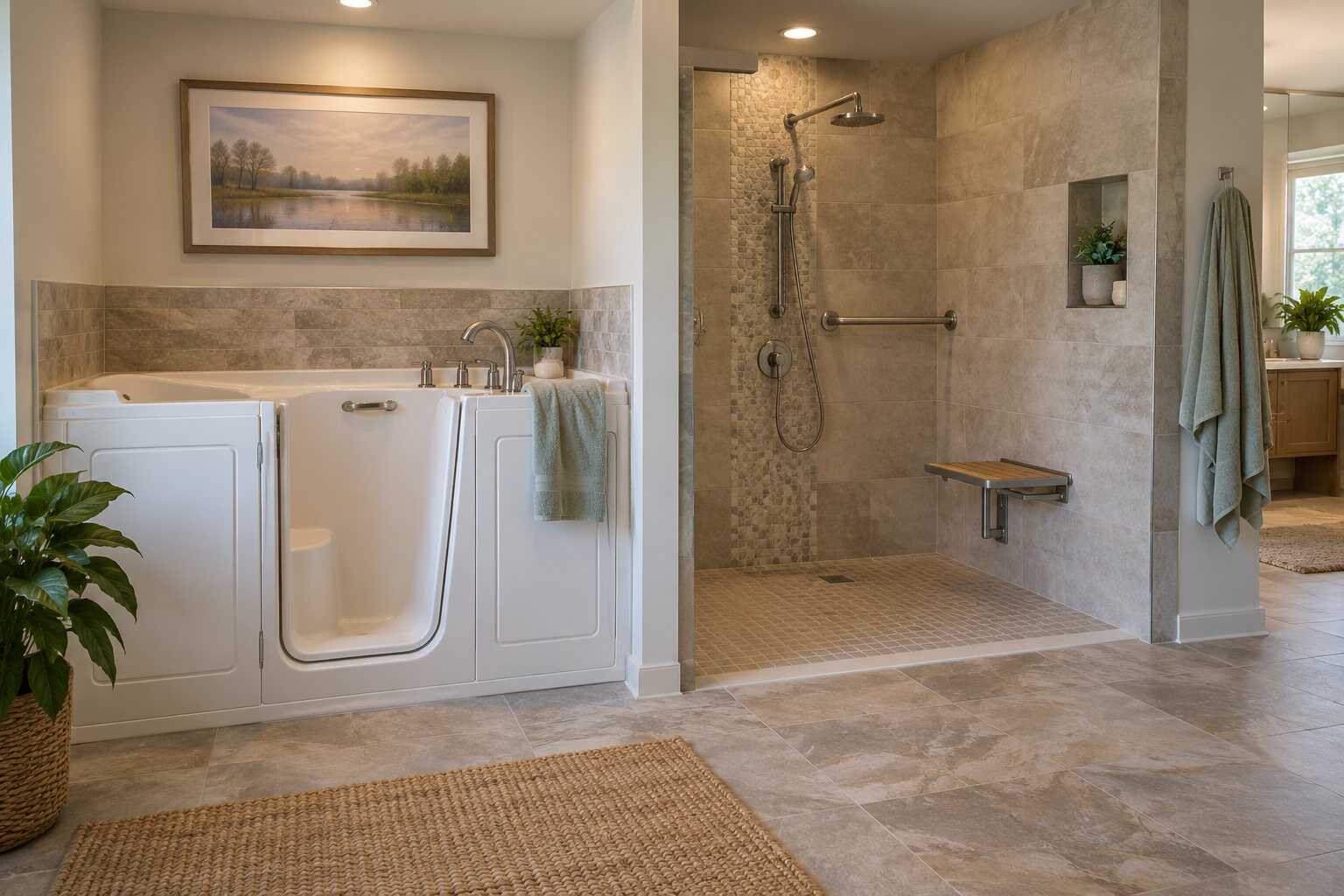
Walk-in tubs vs roll-in showers: access and installed scope
Compare transfers, bathing routines, assistance and full installation costs before choosing a tub or shower.
Planning & practical guidance
Begin with the bathing routine
Record whether the resident wants soaking, seated washing or assisted showering. Trial the transfer and controls where possible with an assessor. A diagnosis or the room's floor area alone cannot select the right bathing arrangement.
Entry and exit
A walk-in tub usually still has a step and a doorway; measure the exact model and seated transfer route. Many door-equipped tubs require the door to remain closed during filling and draining. Confirm the exit sequence, wait times and arrangements if help is needed.
Roll-in shower access
Review the shower chair, turns, transfer options, support equipment and helper space. A step-free entry does not guarantee sufficient room. Some mobility devices are unsuitable for wet use, so confirm the intended bathing equipment rather than assuming the resident can roll in on their everyday chair.
Hot water and electrical supply
Ask the supplier to assess the chosen tub against the home's supply, water-heater performance, drains and electrical installation. KOHLER says suitability can depend on location, water-heater size and condition; fill and drain times vary with household plumbing. Universal gallon, circuit and drain-pump rules would misdescribe different products.
Comfort and support
Discuss waiting while a tub fills or drains, water temperature control, reaching supplies and how a helper can assist. Showers also need a plan for warmth and comfort. Neither option removes all slip, transfer or assistance concerns.
Compare complete written quotes
Use your own country and currency. Include removal, structural work, plumbing, power, waterproofing, finishes, equipment, approvals and aftercare. Ask for itemised alternatives; unverified worldwide averages cannot predict the total for a particular home.
“Roll-in tub”, walk-in bath or roll-in shower?
If a description says “roll-in tub”, ask the supplier to show the exact entry and transfer sequence rather than assuming a wheelchair can roll into it. A door-equipped soaking bath and a roll-in shower use different arrangements. Confirm whether the design requires stepping, a seated transfer, a bathing chair or other assessed equipment.
The US Access Board treats bathtubs, transfer showers and roll-in showers separately. A roll-in shower still needs the appropriate entry, controls, support and space; the term alone does not establish suitability for a particular user or everyday wheelchair. Compare the actual plan, demonstration and installation scope with an assessor.
Plan together
For residents and families
Record the resident's preferences, difficult tasks and space constraints. Bring them to an individual assessment.
For contractors and professionals
Confirm assessed needs, local requirements and the chosen system's installation instructions before specifying work.
Related planning guides
Sources & further reading
Reviewed 7 October 2026. US standards apply within their scope; local rules and individual needs require confirmation. No hands-on product testing or professional certification is claimed.
Turn this guide into a plan
Choose the next step that fits your project. These tools help prepare a discussion; they do not replace an individual assessment.
Frequently asked questions
Is a roll-in tub the same as a roll-in shower?
Do not assume the terms describe the same access. Ask for the exact product and entry sequence: a soaking bath may need a step or seated transfer, while a roll-in shower needs appropriate bathing equipment, space and controls. Confirm the proposed arrangement with an individual assessment rather than relying on the product name.