 Accessible Home Hub
WORLDWIDE PLANNING · PRACTICAL GUIDE
Radar fall sensors vs wearables: coverage, consent and response
Compare the whole alert pathway, including what happens when detection fails.
Planning & practical guidance
Distinguish radar, optical systems and wearables
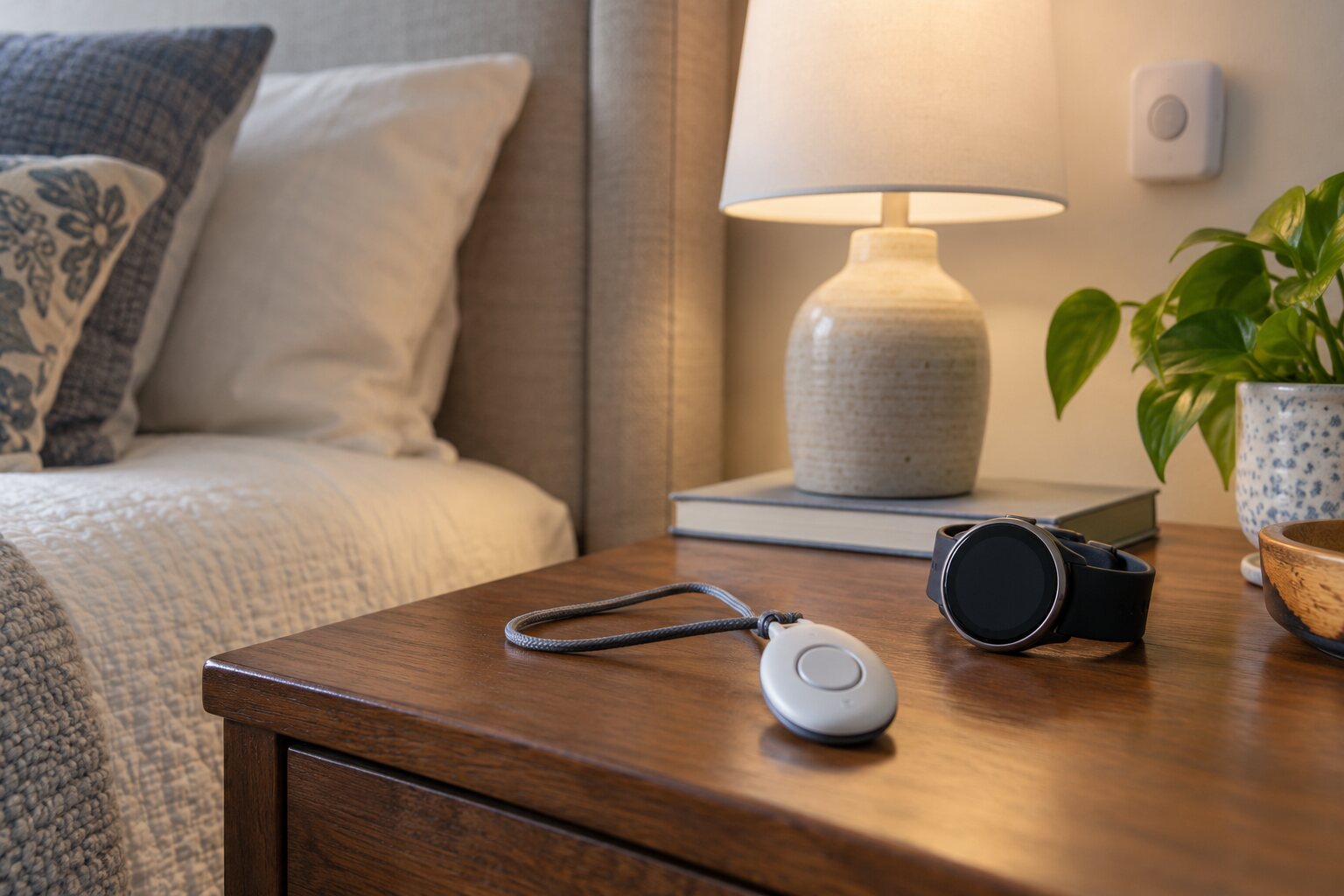
Radar uses reflected radio signals to infer movement and position; Vayyar describes a camera-free radar system. Nobi describes optical care sensors, so it should not be grouped as camera-free radar. Pendants and watches are worn devices, with manual alerts, automatic detection or both depending on the model. Compare the actual sensing method rather than the marketing label.
Map installed and worn coverage
A room sensor relies on its approved mounting, room layout, power and service configuration. A wearable relies on being worn, charged and connected as required. Ask specifically about bathrooms, stairs, multiple occupants, pets and outdoor travel. Operation in steam does not establish a waterproof rating or permission to mount in a shower zone.
Ask about missed and false detections
Apple states that its watch cannot detect all falls and may mistake high-impact activity for one. Request model-specific evidence and limitations for any system, including slow descents and obscured positions. Do not assume radar always has fewer false alarms. No unsupported percentage of pendant non-use or promise of complete coverage is used here.
Confirm who responds to an alert
Write down who receives, acknowledges and acts on alerts, including overnight and when a caregiver is unavailable. Confirm whether the service contacts family, a monitoring centre or emergency services. Apple’s automatic escalation has specific settings and connection requirements; a one-minute rule is not universal across devices. Arrange a supplier-approved test without staging a dangerous fall.
Agree consent and data access
Explain detection, stored information, remote access and retention to the resident. Camera-free sensing can still disclose sensitive activity patterns. For optical systems, confirm image-sharing settings separately. Agree who can access information, how consent or monitoring can be changed, and what happens to data when the service ends.
Compare the complete service cost
Request local equipment, installation, connectivity and subscription prices with contract terms. Include replacement, support, outage behaviour and battery maintenance. Ask what remains functional without internet or power. Combine monitoring with an assessed home plan and an agreed way to request help; neither a sensor nor a watch guarantees a rescue.
Plan together
For residents and families
Record the task, resident preferences and constraints, then discuss options with an individual assessor.
For contractors and professionals
Confirm assessed needs, manufacturer instructions and local requirements before specifying work.
Return to the room-by-room planning checklist
Record priorities on the free home planning sheet
Sources & further reading
Sources reviewed 7 October 2026. No hands-on product testing or professional certification is claimed. US standards are contextual references, not universal private-home rules.
Turn this guide into a plan
Choose the next step that fits your project. These tools help prepare a discussion; they do not replace an individual assessment.